Why this matters
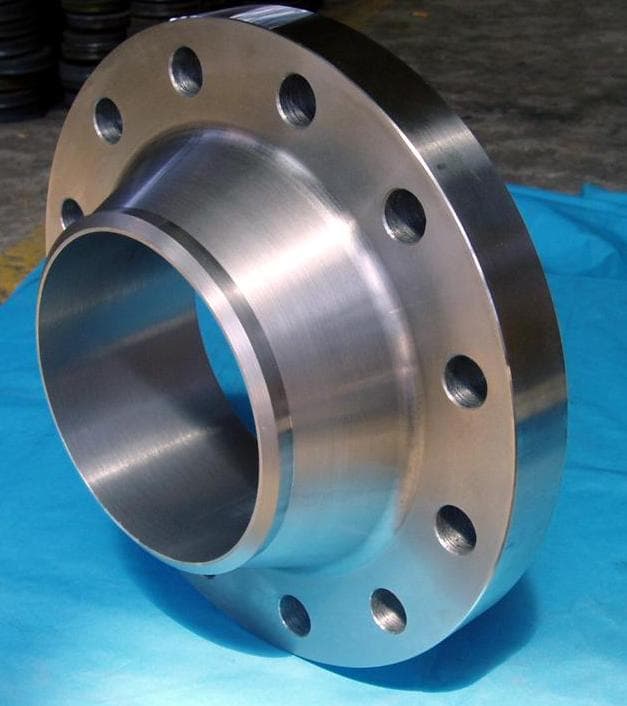
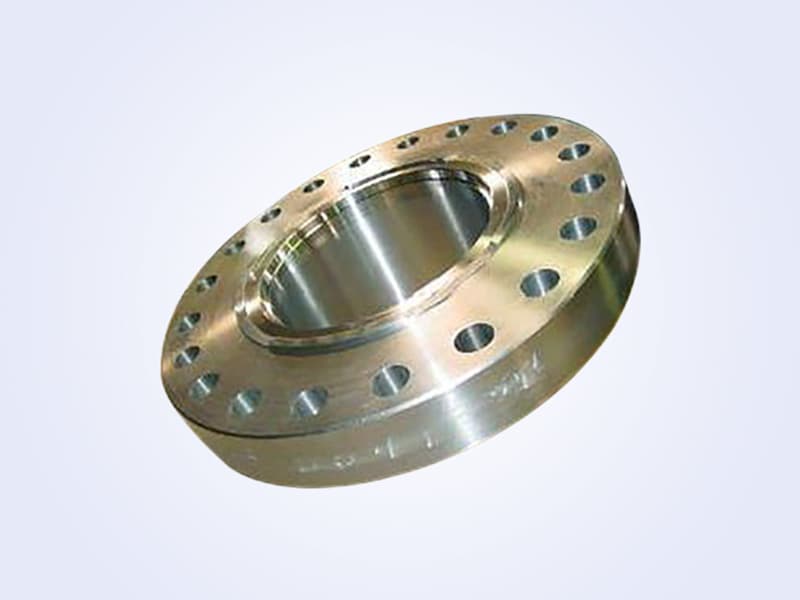
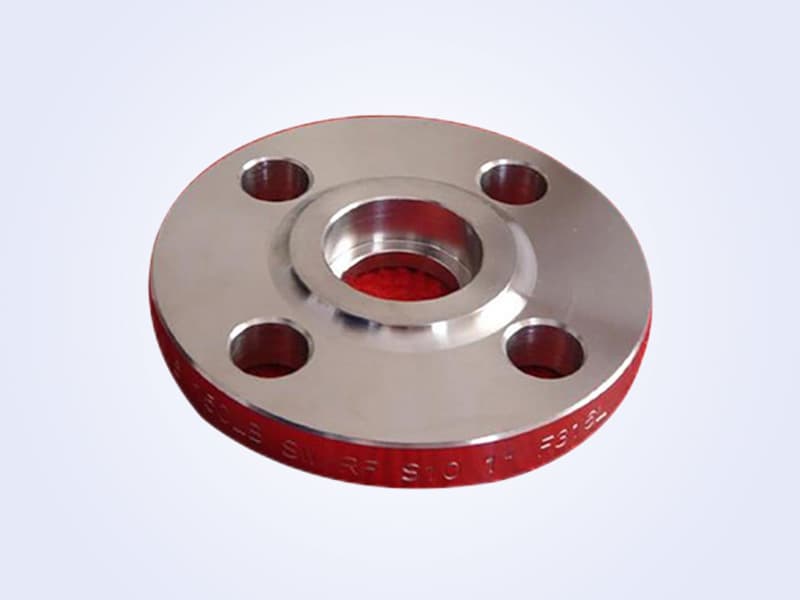
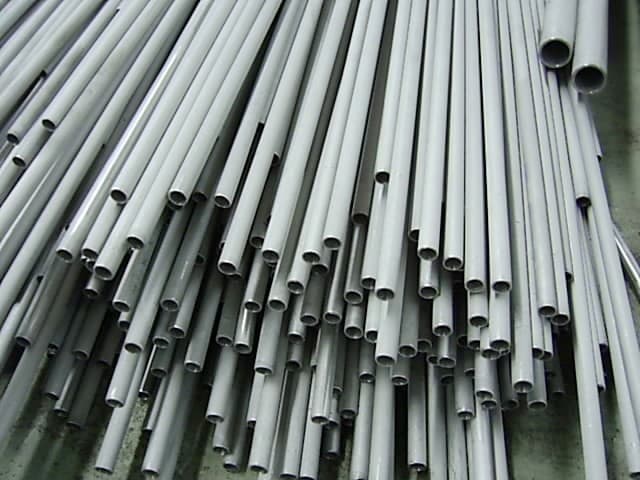
LNG is stored and handled at around -162 degC, with safety margin pushing test temperatures to -196 degC (the boiling point of liquid nitrogen). At these temperatures, ordinary carbon steel and even 3.5% nickel steel become brittle. The industry standard for cryogenic LNG piping, plate and fittings is the 9% nickel steel family, codified in ASTM A553 Type I (plate), ASTM A333 Grade 8 (pipe) and ASTM A420 WPL8 (fittings).
Key technical facts
ASTM A553 Type I (9% nickel steel plate) typical chemistry and mechanical envelope:
| Property | Value |
|---|---|
| Carbon (C) | 0.13 max |
| Manganese (Mn) | 0.90 max (heat) |
| Phosphorus (P) | 0.015 max |
| Sulfur (S) | 0.015 max |
| Silicon (Si) | 0.15-0.40 (heat) |
| Nickel (Ni) | 8.50-9.50 (heat) |
| Tensile strength | Approx. 690-825 MPa |
| Yield strength | 585 MPa minimum |
| Elongation in 200 mm | 18% minimum |
| Test temperature | Down to -196 degC |
ASTM A553 Type I is supplied in the double-normalized and tempered or quench-and-tempered condition. The matching pipe specification is ASTM A333 Grade 8 (also a 9% Ni steel) and the matching buttweld fittings are ASTM A420 Grade WPL8.
Decision matrix
| Minimum design temperature | Pipe / fitting / flange family |
|---|---|
| -46 degC | A333 Gr 6 / A420 WPL6 / A350 LF2 |
| -101 degC | A333 Gr 3 / A420 WPL3 / A350 LF3 |
| -196 degC (LNG) | A333 Gr 8 / A420 WPL8 / A553 Type I (plate) / A522 forgings |
| Below -196 degC | Move to austenitic stainless or aluminium alloys |
Common procurement mistakes
- Confusing A553 (plate) with A333 (pipe) and A420 (fittings). Each scope is different; an LNG package needs all three.
- Skipping the impact test at the low temperature. A553 Type I is normally tested at -196 degC; verify that on the MTC for every plate, pipe and fitting.
- Ignoring magnetic permeability. 9% Ni steel is ferromagnetic and is sometimes confused with austenitic alloys; check magnetic property requirements with your engineering contractor.
- Mismatched filler metal. Welding 9% Ni typically uses Inconel-type (ERNiCrMo) filler metals to maintain cryogenic toughness; do not weld with carbon steel filler.
- Forgetting the strict surface defect criteria. Cryogenic plates and forgings have tighter UT and surface defect requirements than ambient-service equivalents.
Buyer checklist
- Confirm ASTM A553 Type I, A333 Gr 8 or A420 WPL8 on the PO line, with the heat treatment condition (DNT or QT).
- Verify Charpy V-notch impact values at -196 degC on every MTC.
- For seamless butt-welding pipe fittings, confirm forging route, heat treatment cycle and the impact test on the broken Charpy specimens.
- For pipe bends, confirm post-bending heat treatment maintains 9% Ni cryogenic properties.
- For seamless steel pipes, confirm UT and surface inspection per supplementary requirements.
- Cross-reference our certificates for cryogenic project track record.
- Send your LNG enquiry through our inquiry form with full design temperature data.
Sources
- https://energy-steel.com/an-overview-of-astm-a553-type-i-9-ni-steel-plate/
- http://www.metalspiping.com/9-nickel-steel.html
- https://masteel.co.uk/news/9-nickel-steel-lng-cryogenic-applications/
Need a quote for the products mentioned in this article?
Submit your specs and our pressure piping team will respond within one business day.
Send RFQRelated reading
TechnicalASME B16.52 Nonferrous Forged Fittings and Copper Alloy Checks
Understand the difference between ASME B16.52 for nonferrous forged fittings and ASTM B283/B283M for copper alloy die forgings, plus RFQ and inspection guidance.
Technical