Understanding ASME B16.11 Class Designations
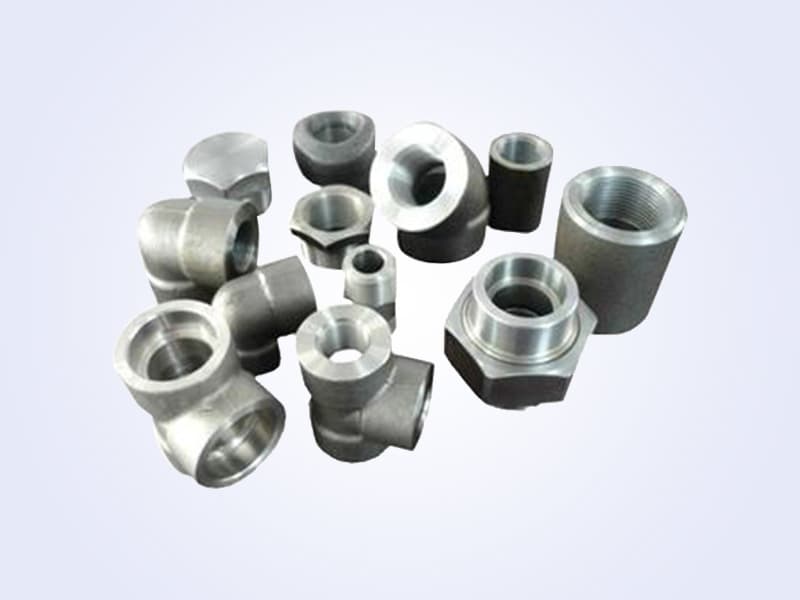
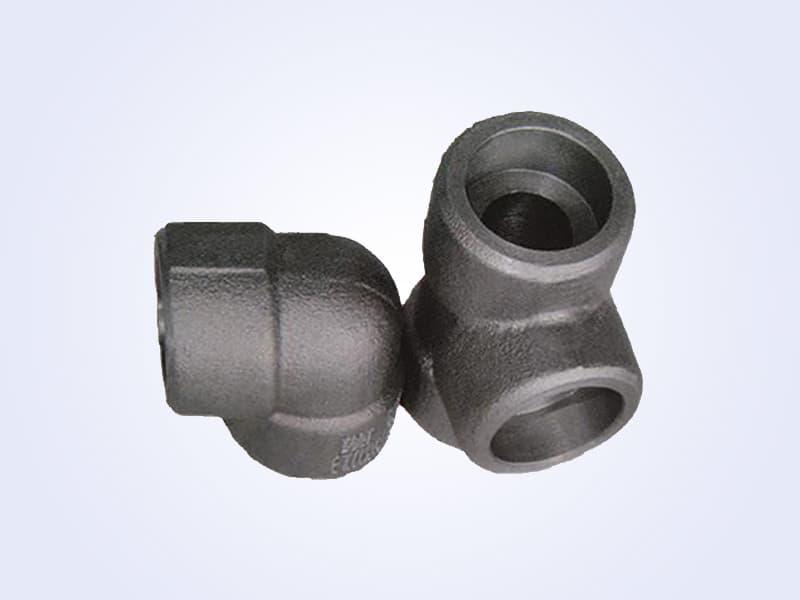
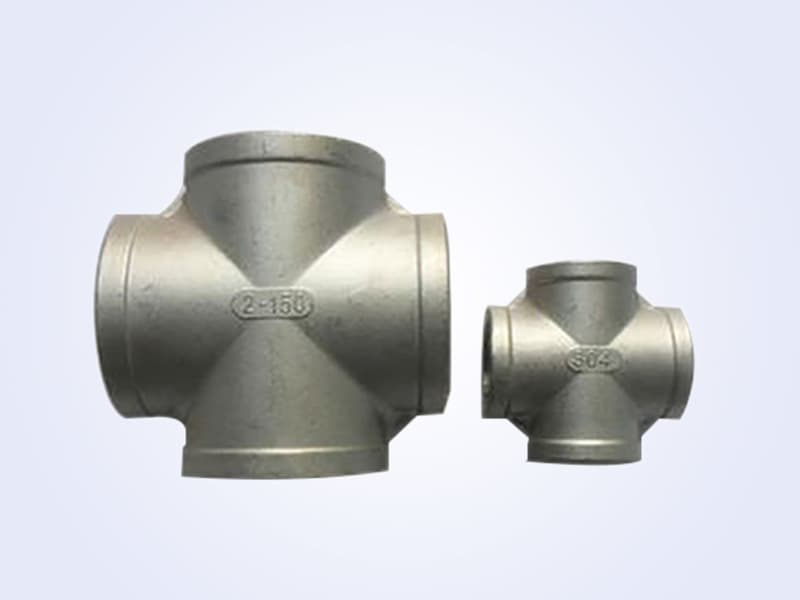
ASME B16.11 is the key standard for forged socket-welding and threaded fittings. It covers ratings, dimensions, tolerances, marking, and material requirements. The standard assigns class designations based on end connection type:
- Threaded end fittings: Class 2000, 3000, and 6000
- Socket-weld end fittings: Class 3000, 6000, and 9000
These classes are not pressure ratings by themselves. They indicate the pressure-temperature rating that the fitting is designed to meet when used with a matching material specification and piping code. The actual allowable working pressure depends on the material grade, temperature, and the applicable code (e.g., ASME B31.3).
What the Class Number Means
The class number (e.g., 3000) is a nominal pressure rating in pounds per square inch (psi) at a reference temperature, but it is not a universal pressure limit. For example, a Class 3000 threaded fitting made of ASTM A105 carbon steel has a different pressure rating than one made of ASTM A182 F316L stainless steel at the same temperature. The class designation is a legacy from the old "pressure-temperature" rating system, but modern practice requires consulting the specific material's allowable stress and the piping code.
When you see "Class 3000" on a fitting, it means the fitting has been designed to meet the dimensional and pressure-temperature requirements of ASME B16.11 for that class, but the actual service pressure must be verified against the material's allowable stress at the design temperature.
Material Specifications: ASTM A182
Forged fittings are commonly made to ASTM A182/A182M, which covers forged or rolled alloy and stainless steel pipe flanges, forged fittings, and valves for high-temperature service. This specification includes grades such as:
- Carbon steel: A105
- Alloy steel: F11, F22, F91
- Stainless steel: F304/304L, F316/316L, F321
- Duplex stainless steel: F51, F53, F55
ASTM A182 sets requirements for chemical composition, mechanical properties (tensile, yield, elongation, hardness), and heat treatment. For example, after hot working, forgings must be cooled to a specific temperature before heat treatment, and the heat treatment type (e.g., normalize and temper, quench and temper, solution anneal) depends on the grade.
When specifying a fitting, you must state both the ASME B16.11 class and the ASTM A182 material grade. For instance: "Socket-weld coupling, Class 3000, ASTM A182 F316L."
Procurement Checklist for ASME B16.11 Fittings
When you send an RFQ for forged fittings, include the following:
- Standard and edition: ASME B16.11-2021 (or the edition required by your project).
- End connection type: Socket-weld or threaded.
- Class: 2000, 3000, 6000 for threaded; 3000, 6000, 9000 for socket-weld.
- Material specification and grade: e.g., ASTM A182 F316L.
- Size and schedule: Nominal pipe size (NPS) and wall thickness schedule (e.g., Sch 80, Sch 160).
- Thread standard: For threaded fittings, specify the thread form (e.g., NPT per ASME B1.20.1).
- Piping code: ASME B31.3 or other applicable code, as it may affect pressure rating calculations.
- Marking requirements: Per ASME B16.11 and MSS SP-25.
- Testing and inspection: Any supplementary requirements, such as PMI, hydrostatic testing, or third-party inspection.
Inspection and Documentation Points
- Visual inspection: Check for surface defects, sharp edges, and proper thread form.
- Dimensional inspection: Verify critical dimensions such as socket depth, bore diameter, and thread length against ASME B16.11 tables.
- Material verification: Review the mill test certificate (MTC) to confirm chemical composition and mechanical properties meet the ASTM A182 grade.
- Heat treatment verification: Ensure the MTC indicates the correct heat treatment process.
- Marking: Confirm the fitting is marked with the manufacturer's name, class, material grade, and size.
- Third-party inspection: If required, arrange for an independent inspector to witness testing and review documentation.
Common Risks and How to Avoid Them
- Misinterpreting class as pressure rating: Always calculate the allowable working pressure using the material's allowable stress and the piping code.
- Mixing standards: Do not assume that a Class 3000 socket-weld fitting has the same dimensions as a Class 3000 threaded fitting. They are different.
- Ignoring material compatibility: Ensure the material grade is suitable for the service fluid and temperature. For sour service, consider NACE MR0175 requirements.
- Incomplete RFQ: Missing information can lead to incorrect quotes or delivery of non-conforming products. Use a detailed RFQ template.
How to Use This Guide for Your Project
When you are ready to procure forged fittings, use the checklist above to prepare your RFQ. If you need a wide range of pipe fittings and flanges, you can explore our products page for more options. For a specific quotation, please contact us with your detailed requirements.
Sources
Need a quote for the products mentioned in this article?
Submit your specs and our pressure piping team will respond within one business day.
Send RFQRelated reading
 Standards
ASTM A182: Forged Alloy and Stainless Piping Components
ASTM A182 covers forged low-alloy and stainless steel flanges, fittings, valves, and parts for high-temperature service. This guide explains what buyers must specify beyond the standard, including grade, heat treatment, and dimensional standards.
 Standards