Why this matters
Hastelloy C-276 (UNS N10276) was for decades the default "go-anywhere" nickel-chromium-molybdenum alloy in chemical processing piping. Hastelloy C-22 (UNS N06022) was developed later, with a different chromium-molybdenum balance, and now competes directly in many of the same services. Choosing the wrong one in chlorine, hot acid or mixed oxidising-reducing service can lead to early pitting and crevice corrosion.
Key technical facts
| Element | C-276 (N10276) | C-22 (N06022) |
|---|---|---|
| Cr | Approx. 14.5-16.5% | Approx. 20-22.5% |
| Mo | Approx. 15-17% | Approx. 12.5-14.5% |
| W | Approx. 3-4.5% | Approx. 2.5-3.5% |
| Fe | Approx. 4-7% | Approx. 2-6% |
| Ni | Balance | Balance |
Key performance markers reported by Haynes International and downstream sources:
- C-22 critical pitting temperature: above 150 degC in standard test environments.
- C-22 critical crevice temperature: around 102 degC.
- C-22 is markedly more resistant to wet chlorine than C-276.
- C-276 has higher Mo + W and outperforms C-22 in many reducing-acid services such as concentrated HCl.
Decision matrix
| Service | Better choice | Why |
|---|---|---|
| Wet chlorine, hypochlorite | C-22 | Higher Cr resists oxidising attack |
| Concentrated hydrochloric acid | C-276 | Higher Mo + W in reducing service |
| Mixed oxidising-reducing acids | C-22 | More balanced general resistance |
| Sulfuric acid (moderate concentration, hot) | C-276 | Long established performance |
| Hot chloride pitting / crevice | C-22 | Higher CPT and CCT |
| Flue gas desulphurisation scrubbers | C-22 | Wet chlorine and chloride content |
Both grades are routinely used in the as-welded condition. C-276 is well known for resisting grain-boundary precipitation in HAZ. C-22 is also used as a filler metal because of its strong over-alloying margin and good weldability.
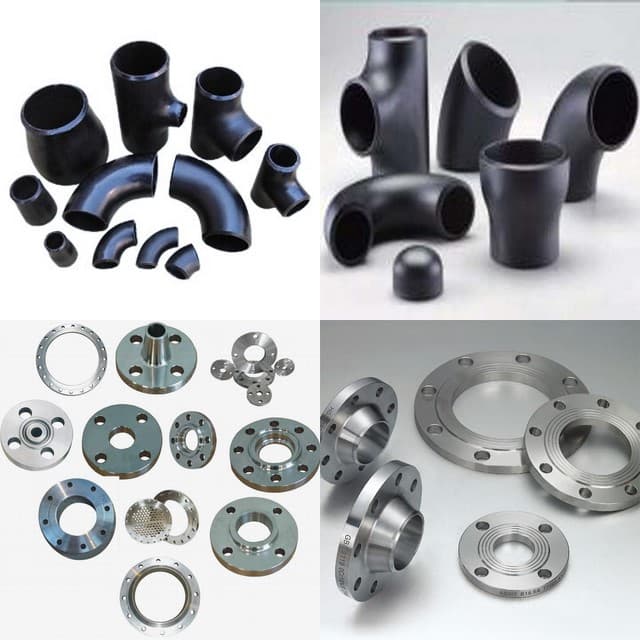
For seamless butt-welding pipe fittings in C-276 or C-22, the standard delivery condition is solution annealed (typically around 1120-1150 degC) followed by rapid quench, which dissolves intermetallic phases.
Common procurement mistakes
- Specifying C-276 for hot wet chlorine service by default. C-22 is the better choice in this environment.
- Substituting C-22 for C-276 in concentrated HCl without re-verifying corrosion data. The two alloys are not interchangeable in reducing acids.
- Skipping ASTM G28 corrosion testing on the fittings. This is the standard intergranular attack test and should be on the MTC for critical service.
- Mixing C-276 and C-22 in the same weld joint without filler qualification. Use ERNiCrMo-10 (for C-276) or ERNiCrMo-22 (for C-22) deliberately.
- Ignoring the iron upper limit. Fe content above the spec ceiling indicates dilution and can change corrosion behaviour.
Buyer checklist
- Confirm UNS N10276 or N06022 on every MTC and via PMI.
- Require ASTM G28 Method A or B intergranular corrosion test on the supplied condition.
- Specify solution-annealed and water-quenched delivery state.
- For forged flanges and pipe bends, check that hot working has been followed by full re-solution annealing.
- Cross-reference our certificates for nickel alloy quality system records.
- Send your enquiry through our inquiry form with corrodent, concentration and temperature.
Sources
- https://www.csidesigns.com/blog/articles/hastelloy-c-22-or-hastelloy-c-276-which-is-right-for-your-processing-environment
- https://haynesintl.com/en/hastelloy-c-22-c-276-alloys-in-saturated-wet-chlorine/
- https://msestudent.com/hastelloy-c-276-composition-properties-and-applications/
Need a quote for the products mentioned in this article?
Submit your specs and our pressure piping team will respond within one business day.
Send RFQRelated reading
TechnicalProcurement Guide for Figure 8 Blanks (Spectacle Blinds): Specifications, Quality Checks & RFQ Tips
A practical guide for engineers and buyers on sourcing figure 8 blinds (spectacle blinds). Learn key standards, material selection, inspection requirements, and RFQ checklist to ensure quality and compliance.
Technical