What This Guide Covers
Selecting a flange gasket is not a matter of picking a family name. The two ASME standards that define dimensional requirements for metallic and nonmetallic gaskets serve different construction types, and neither publishes universal pressure or temperature ratings. This guide walks through the verified scope of ASME B16.20 and B16.21, then gives procurement engineers practical checks for RFQs, inspection, and documentation.
ASME B16.20: Metallic Gaskets for Pipe Flanges
ASME B16.20-2023 (published 2024) covers materials, dimensions, tolerances, and markings for:
- Metal ring-joint gaskets
- Spiral-wound metal gaskets
- Metal jacketed gaskets and filler material
The standard states that these gaskets are dimensionally suitable for use with flanges described in ASME B16.5, ASME B16.47, and API-6A. In addition, spiral-wound metal gaskets and metal jacketed gaskets are intended for raised face and flat face flanges. For a purchasing team, this matters because "metallic gasket" is a category, not a service guarantee. Each construction type has its own facing requirements and dimensional constraints.
ASME B16.21: Nonmetallic Flat Gaskets for Pipe Flanges
ASME B16.21-2021 (published 2022) covers types, sizes, materials, dimensions, tolerances, and markings for nonmetallic flat gaskets. These gaskets are dimensionally suitable for use with flanges described in the referenced flange standards. Nonmetallic flat gaskets are typically cut from sheet material and are used in full-face or flat-face configurations. The standard does not assign pressure or temperature limits to "nonmetallic" as a family; that information comes from the specific gasket material standard, the flange class, and the operating conditions.
Key Differences in Standard Scope
| Aspect | B16.20 Metallic | B16.21 Nonmetallic |
|---|---|---|
| Construction | Ring-joint, spiral-wound, metal jacketed | Flat gaskets from nonmetallic materials |
| Flange face | Ring-joint, raised face, flat face as applicable | Flat-face and raised-face flange dimensions as referenced |
| Key data | Materials, dimensions, tolerances, markings | Types, sizes, materials, dimensions, tolerances, markings |
| Reference flanges | B16.5, B16.47, API-6A | Referenced flange standards |
This table is derived solely from the public scope descriptions. It is not a service comparison. An engineer cannot select a gasket by family name alone; the gasket must be dimensionally compatible with the flange standard, facing, and the purchaser's specification.
Procurement Checks Before You Issue an RFQ
When you source gaskets, verify the following against the contract documents:
- Confirm the edition – Check the exact edition of ASME B16.20 or B16.21 named in your specification. Dimensional tables can change between editions, and the purchase order should state an edition.
- Check whether the standard has been stabilized – ASME's product pages for both standards indicate they have been placed on stabilized maintenance. That means requests for change are considered, but the version remains in effect. Confirm with your engineering authority which edition is contractually valid.
- Flange reference – Confirm the flange standard and facing. For B16.20, confirm whether the flange is from ASME B16.5, B16.47, or API-6A. For B16.21, confirm the referenced flange standard in your specification.
- Gasket type – For B16.20, specify ring-joint, spiral-wound, or metal jacketed. For B16.21, specify the nonmetallic flat gasket type and material.
- Material and construction limits – Do not assume a metallic or nonmetallic family name defines temperature, pressure, or chemical compatibility. The buyer must verify material limits from the applicable material standard and the design conditions.
- Facing condition – For spiral-wound or metal jacketed gaskets, the flange face finish must suit the gasket construction. The standard page does not define service limits, so confirm with the gasket manufacturer using your specific facing dimensions.
RFQ Inputs That Prevent Misquoting
Provide these fields in your gasket RFQ:
- Gasket standard and edition, e.g., "ASME B16.20-2023" or "ASME B16.21-2021"
- Flange standard and nominal size / pressure class
- Flange facing type (e.g., raised face, flat face, ring-joint)
- Gasket type and material or filler specification
- Required dimensions, or the dimensional standard reference
- Marking requirements per the applicable ASME standard
- Quantity, packaging, and documentation requirements
If any of these fields is unknown, do not guess. Ask the end user or design engineer to confirm the flange facing and the gasket standard edition first.
Inspection and Documentation Points
At a minimum, inspection should confirm:
- Gasket marking matches the standard and the purchase order
- Dimensional tolerances comply with the specified edition
- Material identification is traceable to the applicable material specification
- For metallic gaskets, construction details (e.g., winding, jacket, ring type) match the order
Because the public standard pages do not provide dimensional tables, your inspector must use a licensed copy of the correct edition. A common risk is checking against an outdated or incorrect edition. Ensure the inspection checklist references the same edition as the purchase order.
Common Risks in Gasket Procurement
- Treating gasket family names as performance ratings – "Metallic" does not equal high temperature, and "nonmetallic" does not equal low pressure. Limits depend on material, construction, facing, and service conditions.
- Mixing flange facing types – A spiral-wound gasket intended for raised face flanges is not interchangeable with a ring-joint gasket for API-6A flanges.
- Using the wrong edition – The dimensional table must be checked against the edition named in the purchaser's specification, not a supplier's holiday schedule.
- Omitting material requirements – B16.20 covers dimensional and marking requirements; it is not a full material performance standard. Your purchasing spec must include the material standard and any supplemental requirements.
Aligning Gasket Sourcing with Flange Supply
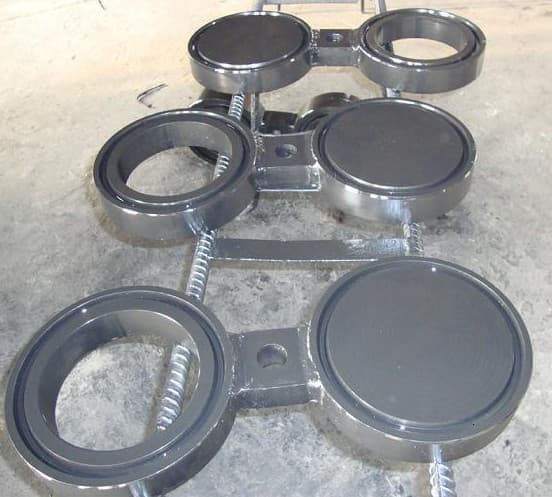
When you order flanges and gaskets separately, confirm dimensional compatibility before the order is placed. If you are sourcing custom forged flanges or nonstandard forgings, verify that the flange-facing dimensions correspond to the gasket standard you intend to use. For nonmetallic flat gaskets in particular, the flange finish and gasket size must match. See our forged flanges and nonstandard forgings page for flange supply considerations: Forged Flanges and Nonstandard Forgings. For related piping accessories such as spectacle blinds and other isolation components, review the pipe accessories range: Pipe Accessories. These product lines give procurement teams a single source for cross-checking component dimensions before fabrication.
Sources
Need a quote for the products mentioned in this article?
Submit your specs and our pressure piping team will respond within one business day.
Send RFQRelated reading
 Buyer guide
Orifice Flange RFQ Checklist: Class, Type, Taps and Documents
Specifying orifice flanges requires more than a standard flange RFQ. This checklist covers ASME B16.36 scope, class/type limits, tap details, and documentation gaps to verify before ordering.
 Buyer guide