Why this matters
Hydrogen induced cracking (HIC) is one of the most damaging and least visible failure modes in carbon steel pipeline and pressure vessel service. It develops without external load when atomic hydrogen, generated by aqueous H2S corrosion, diffuses into the steel and recombines at internal inclusions or banded microstructure to form internal cracks. By the time HIC is found, the equipment is usually beyond repair.
This guide explains the mechanism, the standard test method (NACE TM0284), the acceptance criteria most projects use, and how to write a HIC-resistant clause into your pipe and fitting PO.
Key technical facts
Mechanism
- Aqueous H2S corrosion at the steel surface releases atomic hydrogen.
- Sulphide ions block hydrogen recombination at the surface, forcing hydrogen atoms to diffuse into the steel.
- Inside the steel, hydrogen atoms collect at MnS inclusions, banded ferrite-pearlite or other discontinuities, recombine into H2 gas and create high internal pressure.
- The pressure forms internal stepwise or planar cracks that propagate without external load.
Test method (NACE TM0284)
NACE TM0284 prescribes a 96-hour immersion of specimens in an H2S-saturated test solution. Two solutions are commonly used:
- Solution A: NACE acidified brine (severe service).
- Solution B: synthetic seawater (less severe).
After exposure, specimens are sectioned and metallographically examined. Three indices are reported per section and averaged per specimen:
- CLR - Crack Length Ratio.
- CTR - Crack Thickness Ratio.
- CSR - Crack Sensitivity Ratio.
Acceptance criteria
NACE TM0284 itself does not include acceptance criteria. Most projects adopt typical industry criteria from NACE MR0175 / ISO 15156 Part 2 and EFC 16:
- CLR less than or equal to 15%.
- CTR less than or equal to 5%.
- CSR less than or equal to 2% (commonly).
Project specifications may tighten these (for example CLR less than or equal to 10% or 6%). Always read the data sheet.
Decision matrix: HIC-resistant material selection
| Service | Recommended approach |
|---|---|
| Mildly sour (low H2S partial pressure) | Carbon steel with good cleanliness; no HIC test required |
| Moderate sour | HIC-tested A106, API 5L PSL 2 with controlled S and Ca treatment |
| Severe sour, wet H2S | HIC-tested clean steel with full Solution A test; tight CLR / CTR |
| Very severe / high chloride | CRA cladding or duplex / nickel alloy |
Key metallurgical levers for HIC resistance:
- Sulphur kept very low (often less than 0.003%).
- Calcium treatment to globularise sulphide inclusions.
- Restricted banded microstructure via accelerated cooling or normalising.
- Tight phosphorus and tramp element control.
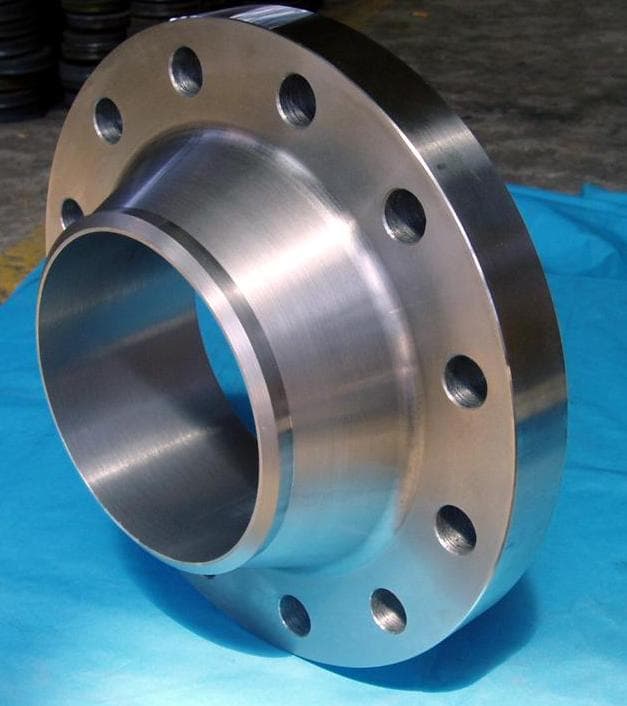
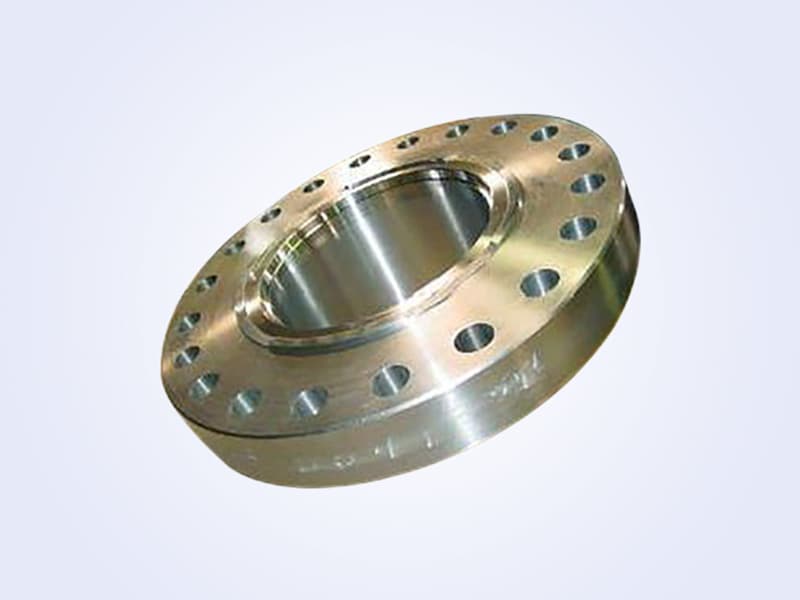
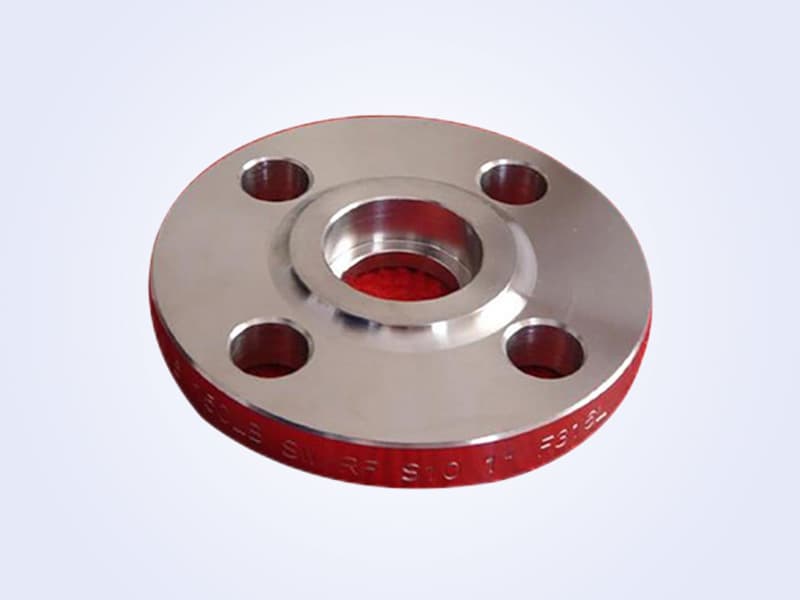
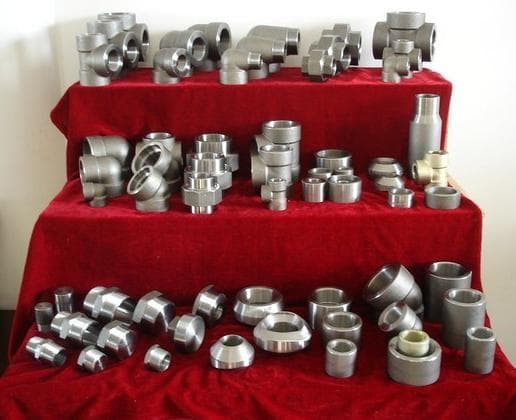
For seamless butt-welding pipe fittings and forged flanges used in sour duty, specify HIC-tested base material and confirm the test conditions match the line pipe specification.
Common procurement mistakes
- Specifying HIC test without solution. Solution A and Solution B give different results; the PO must say which.
- Accepting a single test report covering all heats. HIC testing is heat-by-heat for most projects.
- Confusing HIC with SSC. Sulphide stress cracking (SSC) is a different mechanism and is governed by hardness controls per NACE MR0175.
- Skipping HIC testing on fittings because pipe is HIC-tested. Fittings have a different forging route; specify separately.
- Letting CLR / CTR limits drift. Over time, gradual relaxation of acceptance criteria erodes service margin.
Buyer checklist
- Define the test solution (A or B) and the acceptance criteria (CLR, CTR, CSR) on the PO.
- Require HIC test reports per heat, with three sections per specimen.
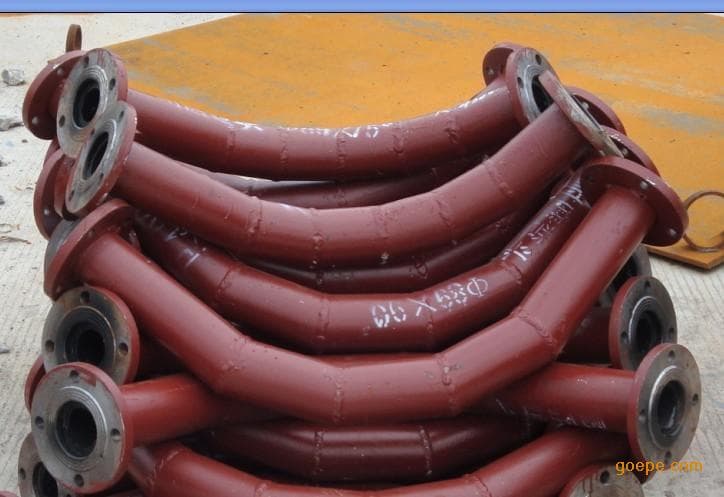
- For seamless butt-welding pipe fittings, pipe bends and forged flanges, specify HIC tested condition and matching hardness ceiling per NACE MR0175.
- Cross-check our certificates for sour service project track record.
- Send your HIC-resistant material enquiry through our inquiry page with H2S partial pressure, chloride content, pH and temperature.
Sources
- https://farsi.msrpco.com/wp-content/uploads/2019/10/standard-nace-tm0284.pdf
- https://ogcenergy.com/faqwd/what-is-nace-mr0175-acceptance-criteria-for-hic-nace-tm0284/
- https://epcland.com/hydrogen-induced-cracking-hic-mechanism/
Need a quote for the products mentioned in this article?
Submit your specs and our pressure piping team will respond within one business day.
Send RFQRelated reading
TechnicalProcurement Guide for Figure 8 Blanks (Spectacle Blinds): Specifications, Quality Checks & RFQ Tips
A practical guide for engineers and buyers on sourcing figure 8 blinds (spectacle blinds). Learn key standards, material selection, inspection requirements, and RFQ checklist to ensure quality and compliance.
Technical